The city of Temples, Ujjain, has been ruled by several Emperors and multifold Dynasties; from the Mauryan Chandragupta to the Buddhist Ashoka, from a Malwa Sultan to the foreign invader Iltutmish. But the city is remembered most for the Golden rule of Vikramaditya who ruled here from 380AD to 415AD. Also known as Chandragupta II, Vikramaditya started the Hindu Calendar Vikram Samvat. The Ujjain Court during his era was noted for its poets and scholars, and included the celebrated poet Kalidas. Ujjain was at its peak during this age; paved with jewels, architecture, artistry and romance
Ujjain has a great blend of History and Mythology. From Lord Krishna’s School to Goddess Parvati’ s Shakti Temple, from King Vikramadityas Throne to Black Magic Gods it has it all. And more so it also noted to be the site for one of the 12 revered Jyotirlings – the Mahakaal. . But as the saying goes, you need divine intervention to visit a Jyotirling in a city like this and it may not happen just by chance. In our case the intervention was in the form of a friend’s wedding in nearby Bhopal. We took a couple of days off from work to visit the Temple city. The journey from Bhopal is close to 150km and takes around 3 hours. You can hire an Indica Cab from Bhopal Bus Stand for Rs.2000. With some haggling we were able to reduce the fare by Rs.300 with a commitment taken from the Cabbie that he would pay all Taxes enroute and there would be no other add-on passenger taken. The journey was smooth and uneventful, enroute if you have some spare time you could visit the Chamunda Devi Temples in Dewas.

The Hotels in Ujjain are a letdown; there are no rated hotels and typical Lodge type accommodations with Double Beds costs anywhere from Rs.500 to Rs.1000. The Hoteliers though are very strict about the Checkout times and again they typically do not serve food. We chose a Lodge nearby the Mahakaal Temple, as we were planning to visit the Deity early morning. As you stroll in the market place you can sight an occasional 3 tyred Auto, a sight seldom seen in a Metro city where they have become a thing of the past. Like in Benaras, almost every prominent household here has its own Temple. So you need a really good guide to Guide you on your temple tour. The market place near Mahakaal Temple has several Auto drivers who offer this Service. A short tour (6 Temples) will cost you Rs.250 and a longer one (10 Temples) will be charged Rs.350/ so we opted for the latter. Our cheerful driver, despite being a Muslim, was very well versed with all the technical knowhow on the Temples and their History. We spent a good 2 hours with him.

First on tour was the Sandipani Ashram where Krishna, Sudama and Balaram were educated. An interesting and unique feature of this Temple is its Nandi. Whereas in other Temples you may find it in sitting posture, this is the only Temple where it is in a standing pose, due to the sanctity this place holds. The Idols within and adorning the walls of the Temple are extremely old. But then the entire city of Ujjain has several such treasures scattered everywhere and with hardly anyone offering a second glance, an Antique dealer might be tempted to gather a bagful and scoot away. There was a Pani-Puri vendor at the Ashrams entrance offering 6 different flavours for Rs.10 and we enjoyed a mouthful.


Next stop was the Temple dedicated to the Planet Mars (Mangal Gruh). Another feather in Ujjians cap, this is the only such temple in India. This was a relatively new temple constructed over the ruins of the Original. The Priest was a friendly sort who allowed us to photograph even in the Sanctum. The Shipra river flows just behind it and you could have the chance of a holy dip. There is a bigger version of this Temple located close-by with restricted entry (only those suffering from the adverse effects of the Planet are allowed to enter and conduct remedial oblations in the presence of a Priest)


Third in line was the SiddhaVat (Eternal Banyan Tree) – the holy Banyan tree planted by Goddess Parvati on the Banks of the Shipra river. The Tree is considered to be immortal and regarded as a Kalpavriksha. During an invasion here in days gone by, the Mughal invaders cut down the Tree drastically and its roots were covered with iron sheets to prevent its growth. The Tree managed to overcome the Iron and became green again. Emperor Ashokas son Mahendra and daughter Sanghamitra are said to have paid obeisance here before starting on their religious tour of promoting Buddhism across the Country. So also King Vikramaditya is said to have done penance here to gain victory over the slippery Betal. The Temple precincts are again adorned with some very old and rare sculptures and you could see glimpses of Hindu mythology in some of them.


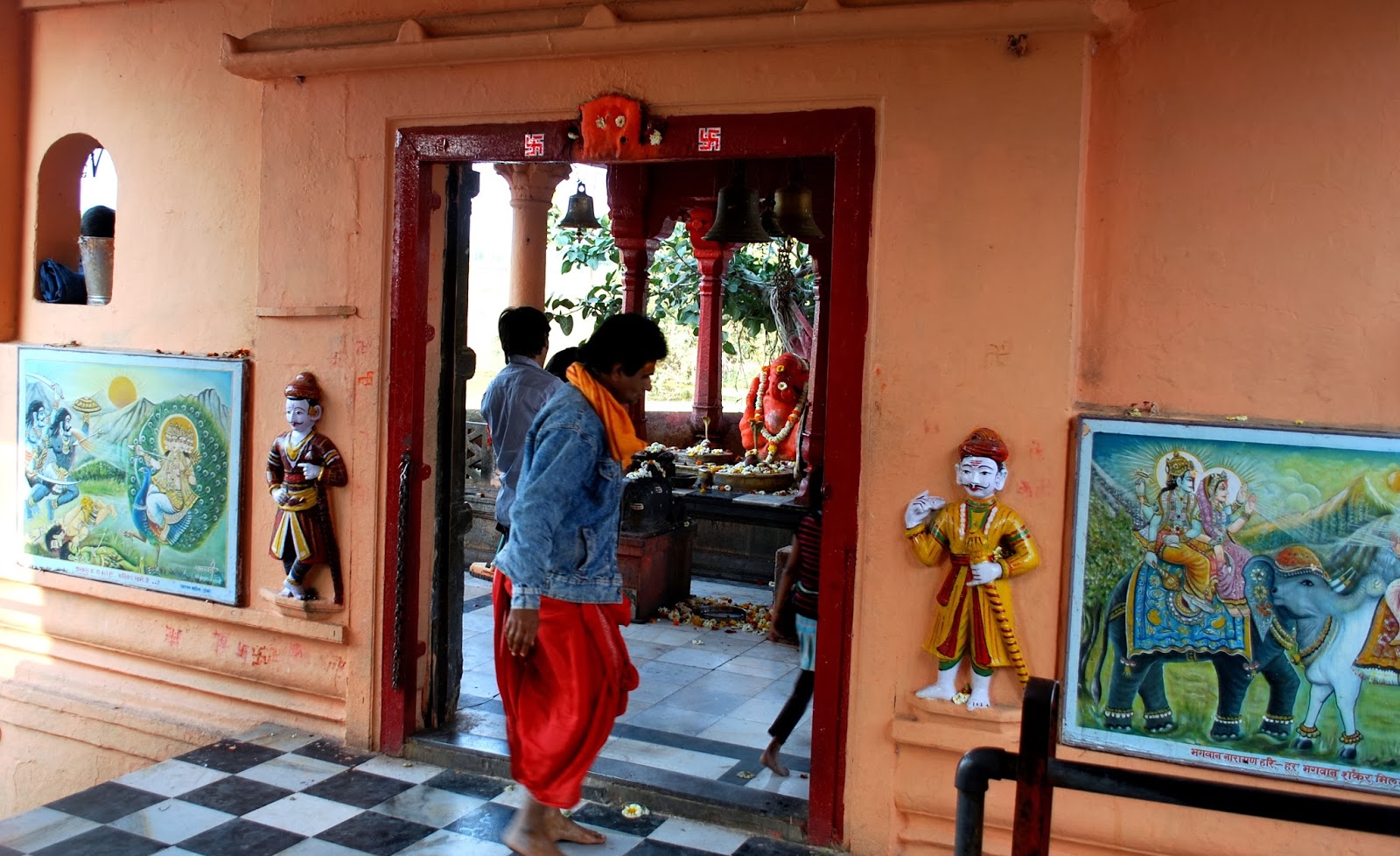

Next in line was the much awaited monument to King Vikramidtyas throne known as “Sinhasan Battisi”. The shrine dedicated to the king is rather small and has a single Priest in attendance. You would rather miss it altogether was it not for the Guide who guides you on its significance. It was proclaimed that the throne had mystical powers and anyone sitting on it was empowered with immense ability to do justice. Later, before the advent of the Muslim invaders, the throne disappeared and was never seen again. On checking with the Priest regarding the whereabouts of the Throne, he mentioned that it was carried to the Heavens by the Gods. Looking at the shrine, you realize the neglect the city has towards its legendary ruler during whose reign the city had reached its pinnacle

Next stop was the KaalBhairav, the fierce manifestation of Shiva. It is considered to be the prime deity of the Aghora and Kapalika sect, an unorthodox Tantric cult with black magic overtones. The vehicle of the Lord is a black dog and you will find its life-size idol facing the Lord outside the Temple, on same lines as a Nandi faces a Shivaling. Liquor is offered to the Lord as a part of the worship. Several shops outside the Temple offer a variety of local and foreign liquor. On entering the Temple you pass on the Offering to the Priest who pours some of it in a small bowl and holds it near the mouth of the Idol…..and in a moment you can actually see the liquid disappearing inside the Lord. The remainder of the Offering in the Bottle can be carried back by the devotee. This Temple was erected by King Bhadrasen and the temple exhibits beautiful Malwa style of architecture. Another unique Temple just adjacent to it is the Pataal Bhairav. The Underground (Pataal) Cave like structure has a small Opening through which you have to crawl on all fours to see the Shivling down inside. As you exit the main Temple, you can be accosted by a bunch of Monkeys at the entrance. Feeding them is a favorite pastime and you can purchase a bunch of green grams from the local vendors at the gate


Our next destinations were two small temples, enroute the Ghats – the Gadhkalika and the Chintaman Ganesh Temple in the marketplace. The great poet Kalidas had obtained his literary skills though his ardent devotion of this deity. The present temple stands in the same site where an older Temple stood. During 7th century, Emperor Harshavardhana modernized the Temple. Subsequently the Maratha rulers of Gwalior rebuilt this holy shrine to its former glory, so you can see their architectural influence in the idols adorning the Temple walls. Digging held near the temple premises unearthed bricks, a part of a plinth and sculptures from various periods. The Ganesh Temple is located in the Marketplace close to Mahakaal. Its idol is supposed to be 'Swayambhu' (self-manifested). The two wives of Lord Ganesha, Riddhi and Siddhi are placed on the either side of the Lord. The majestic image of Lord Ganesh is truly awe inspiring


Our last destination was the Shakti Peeth Harsiddhi. Said to be the deity of King Vikramaditya, it is mentioned in Hindu mythology that Devi Sati’s “Elbow” fell here. The Temple Courtyard flaunts 2 large Towers with 1001 Lamps, almost 3 storied high. Every day before dusk a team of 4 designated persons fill up Oil in these lamps. The process is arduous and risky but is performed with precision and not a single lamp is missed out. This takes around Rs.8000/- worth of Oil and each person is paid Rs300 for his daily routine.
Yet another unique feature of the temple is the Sri Yantra, or nine triangles that represent nine names of Goddess Durga. Also enshrined here is the famous dark vermilion image of Annapurna, the Goddess of Nourishment, seated next to Mahasaraswati, the Goddess of Wisdom and Knowledge. The images painted inside the Walls and Ceiling of the Temple are definitely worth a look and we found ourselves lost in admiring the intricacy of these figurines.


Other than the Beggars and Sadhus, a common sight in the marketplace is the Tattooists. For a nominal fare they can make wonderful sketches on your arms if you can bear the pain. Business is good and you may find several Tourists approaching them for a prick. One thing I observed here was the religious tolerance of the local populace. There could be hardly a place in the Country where a Muslim Auto driver Guides you on the religious significance of a Hindu shrine, so also in the market place you may find a Muslim trader selling literature on Hindu religion. So our Temple city did leave us bewildered at the end of the day, but somewhere you get the feeling that the locals, in their religious fervor, have forgotten their Vikramaditya


